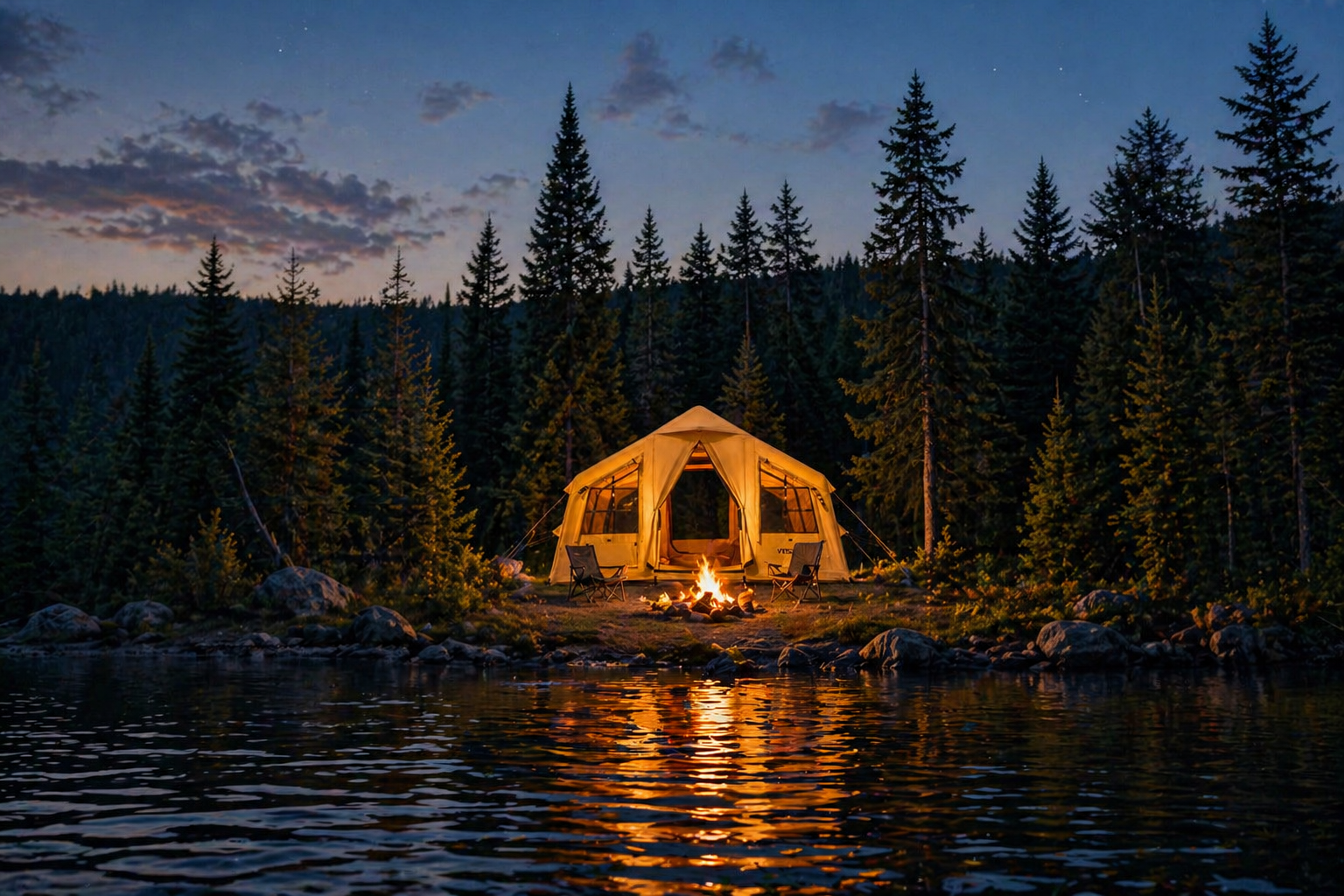
We have all been there: arriving at a campsite as the sun dips below the horizon, only to spend the next hour wrestling with shock-corded fiberglass and cryptic assembly diagrams in the driving rain. For decades, this “struggle” was simply an accepted outdoor tax. However, as we move through 2026, the industry is undergoing a radical shift toward “smart-living” in the wilderness. The inflatable tent market is projected to reach $1.78 billion this year, driven by a generation of campers who prioritize speed, durability, and a stress-free experience. The traditional tent pole isn’t just under threat; in the world of high-end family camping, it is effectively obsolete.
Flexibility is Actually a Survival Feature
At first glance, a tent supported by air seems like a liability, but the physics suggest otherwise. Traditional fiberglass or aluminum poles are rigid; when hit by high winds, they reach a mechanical breaking point and snap, often puncturing the tent fabric in the process. In contrast, air beams are designed to deflect.
In gusts ranging from 30 to 60 mph, these air columns simply bend with the pressure and pop back into shape once the wind subsides. Because the beams are essentially weightless air wrapped in heavy-duty casing, there is no risk of a structural “snap.”
“It’s basically indestructible—like a bouncy castle. Even in brutal windstorms where everyone else is fleeing the campsite, these tents buckle but don’t tear, standing right back up once the wind drops.”
Your Inflatable Tent Might Weigh More Than Your Cooler
While “inflatable” sounds lightweight, the reinforced casings required to hold high-pressure air add significant bulk. This creates a massive disparity in portability that defines whether you are “camping” or “glamping.”
- The Backpacking Specialist (e.g., Heimplanet Fistral): Approximately 5.5 lbs—a sophisticated, lightweight choice for the solo trekker.
- The Family Mansion (e.g., VEVOR 12-person model): Approximately 150 lbs—offering a massive 183 sq. ft. of living space, but strictly a car-camping-only investment.
For the family camper, that extra weight translates directly into a “house-like” footprint that traditional dome tents can rarely match without a nightmare assembly process.
The “Cold Morning” Sag is Basic Physics
A common frustration for new air-beam owners is waking up at 4:00 AM to find the tent walls looking slightly less crisp than they did at sunset. This isn’t a leak; it is Thermal Contraction.
As the temperature drops toward that crisp 0-degree mark common in the northern or mountain destinations during the shoulder seasons, the air inside the beams condenses. This physical reality means that a tent that was firm at 4:00 PM during the heat of the day will lose pressure overnight. Expert campers know to give the valves a quick “top-off” with the pump during a cold morning to regain full structural tension.
Oxford Cloth vs. PVC: The Decade-Long Difference
When selecting an inflatable shelter, your choice of fabric determines whether your investment is a “disposable weekend” option or a “generational investment.”
- 300D/600D Oxford Cloth: This is the “weekend warrior” standard. It is lighter and more affordable, but it has a functional lifespan of roughly 2 to 3 years. Critically, Oxford cloth is often translucent; without specialized coatings, your tent can become a “glowing orange oven” the moment the sun hits it.
- Heavy-Duty PVC: The gold standard for permanent platforms or frequent glamping. With a lifespan of 10 to 15 years, PVC offers superior insulation and light avoidance. However, it is significantly heavier, weighing nearly double that of Oxford cloth.
You Can Finally Sleep Until Noon
One of the most praised innovations for 2026 is the integration of “Fresh & Black” technology. By utilizing specific fabric coatings and high-density weaves, these tents can block up to 99% of daylight. For anyone who has ever been forced awake by a 6:00 AM sunrise, this is a revelation. Beyond the darkness, this technology can reduce interior heat by up to 17% compared to traditional nylon. It transforms the tent from a temporary shelter into a true vacation suite where a mid-day nap is actually possible.
The “One-Pump” Logistics and the Manual Workout
The industry promise is a setup time of 8 to 12 minutes for a full-sized cabin, but the method dictates the effort. While many tents come with a manual pump, inflating a mid-sized model typically requires a 50-60 pump workout. It is efficient cardio, but it may not be how you want to start your trip.
Rechargeable or car-port-powered electric pumps have become the ultimate game-changer. They turn a physical chore into a hands-off experience, allowing you to focus on the view while the air beams do the heavy lifting.
Pro-Tip: Always pack a dedicated patch kit and a backup manual pump. While air beams are tough, manufacturing defects can occur, and budget-friendly brands like VEVOR—while innovative—can have slower customer service response times. Being self-sufficient with a DIY repair kit ensures a slow leak doesn’t end your weekend.
Rooms, Doors, and Vertical Walls
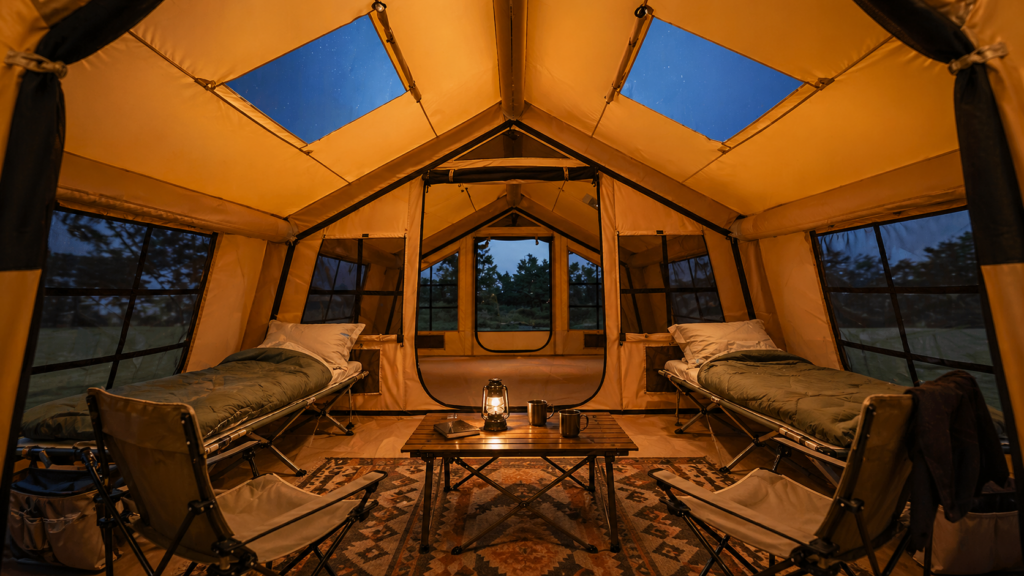
Air-beam architecture has freed designers from the geometric constraints of flexible poles. Because air columns can be shaped into rigid arches and geodesic structures, these tents often feature 90-inch peak heights and nearly vertical walls.
This allows for features that traditional domes cannot easily support, such as separate bedrooms with actual zippered doors—as seen in the Decathlon and VEVOR yurt models—and large, modular porch areas. Systems like the Crua Core even allow you to connect multiple tents together, creating a customizable wilderness mansion that feels more like an apartment than a campsite.
Vevor Inflatable Tent – A Breath of Fresh Air for 2026
The shift toward inflatable technology represents a fundamental change in camping philosophy: a move away from the “struggle” of the setup and toward the enjoyment of the destination. While there are clear trade-offs in weight and the occasional need for a thermal top-off, the benefits of durability in 60mph winds and near-instant assembly are undeniable.
As you plan your 2026 adventures, ask yourself: do you value the tradition of the pole-and-sleeve struggle, or are you ready for the speed and comfort of the air-beam era?
In 2026, the best part of camping isn’t building the shelter—it’s finally having the time to relax.